Blog · AI & Productivity
Does AI Cost Us More or Less Time?
Olaf Lemmens, Founder NinA AI Agency · August 23, 2025 · 8 min read
Last Thursday I had a fascinating LinkedIn Live with Sanne Cornelissen — behavioral psychologist, AI expert and author of 'Me, myself & AI'.
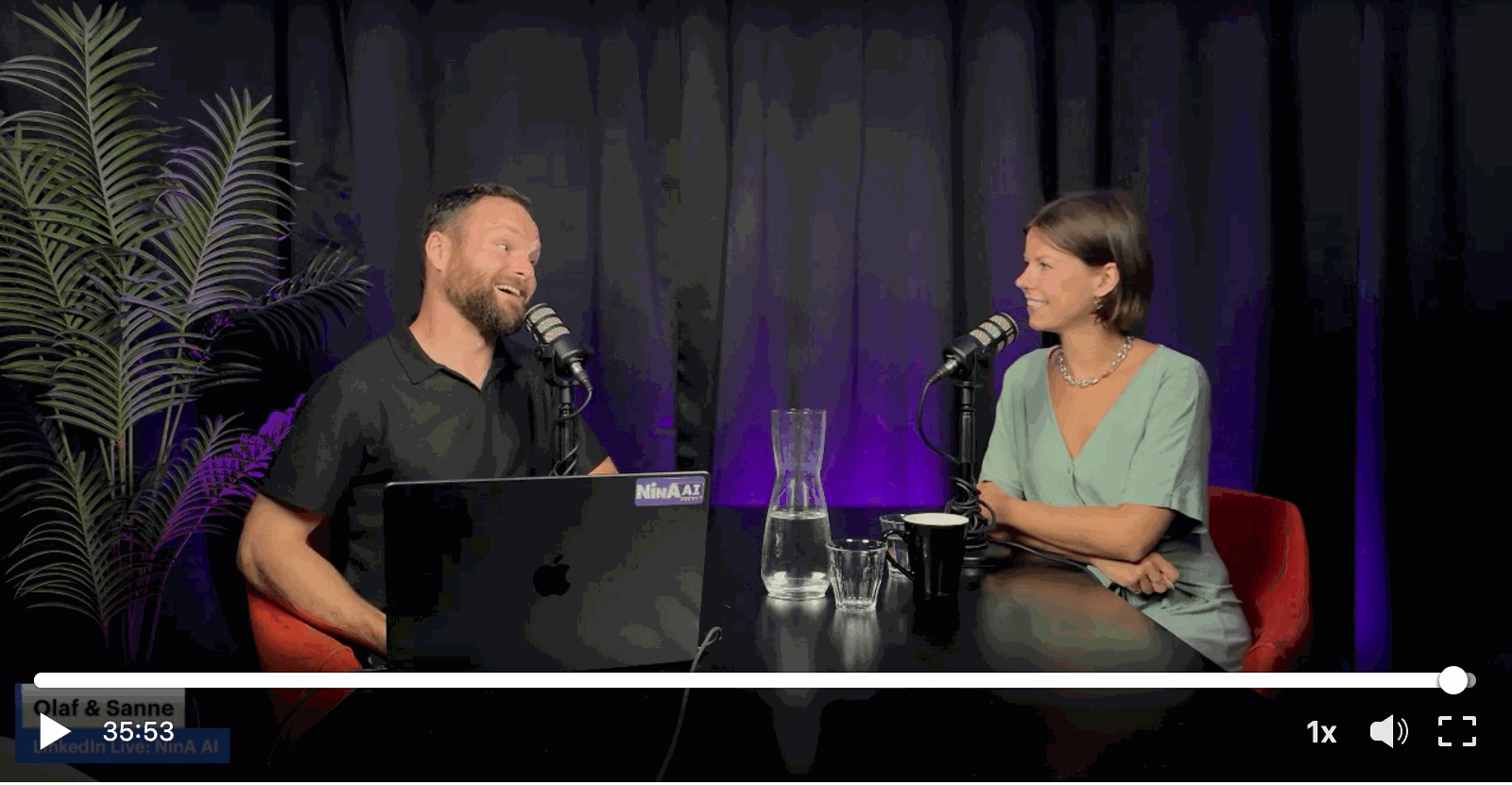
We discussed behavior, behavioral change and AI usage. But also that the investment you need to make in AI (time) doesn't always pay off immediately.
We often spend hours perfecting prompts, testing ten different tools, and forget to just start. It's like spending three hours researching the best route while you could have already been at your destination.
This discussion brought me to an uncomfortable conclusion about how we — yes, even at NinA AI Agency — handle time.
TL;DR
- •AI users save an average of 5.4% work time, but only 3-7% of productivity gains go to employees
- •77% of employees say AI REDUCES their productivity due to new tasks and complexity
- •The solution: reserve time to play with AI, accept imperfection, and stop optimizing before you start
The great time-saving lie
MIT research shows programmers work 21% faster with AI assistance. GitHub Copilot speeds up coding by 56%. Customer service productivity increases by 15%.
Impressive, right?
But here's the thing... A large-scale study of 7,000 workplaces found "no significant impact on earnings or recorded hours in any occupation"
The actual time savings? Only 3% on average, with just 3-7% of productivity gains returning as higher wages.
The problem runs deeper than you think
A mid-sized tech company in Utrecht implemented AI for their development team. Results were spectacular: 40% faster code reviews, automated documentation, intelligent bug detection.
But three months later, something striking happened. The lead developer still worked until 8 PM. "We deliver twice as many features now. But I still work until 20:00."
We stay busy and perhaps only get busier — think back to the arrival of the internet.
Three steps to real AI productivity
1. Start today, not perfectly
Start small with one task you need to do anyway. Stop waiting for the perfect tool.
2. Play before you optimize
Reserve weekly time to experiment with AI without goals. This is where real breakthroughs happen.
3. Accept the paradox
The AI productivity paradox teaches us that technological revolutions are messy, gradual, and often invisible in the moment.
The real question is: do we dare to actually take that time back? And do we dare to play before we optimize?