Blog · AI & Education
Teens and AI: This Is Already Happening (and Almost Nobody Is Talking About It)
Olaf Lemmens & Daan van Drunen, Founder NinA AI Agency · March 4, 2026 · 7 min read
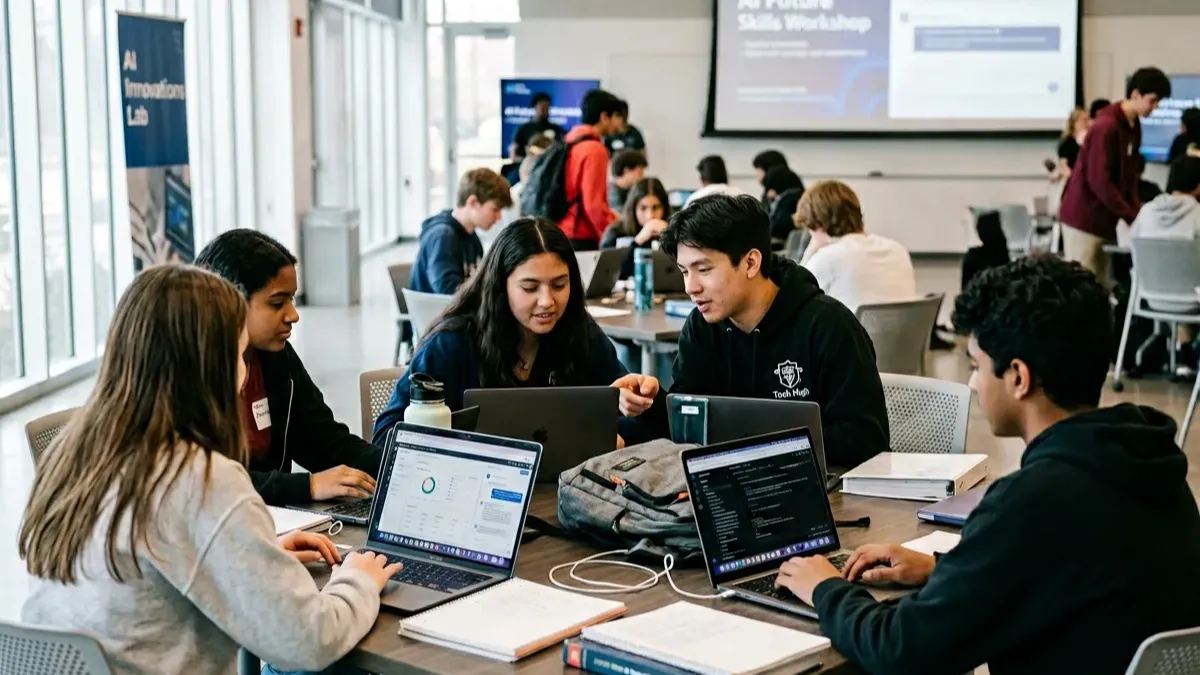
They use it for homework, advice and sometimes even emotional support.
Last week I was sitting next to a 16-year-old boy on the train on my way to a client.
He was doing his homework. At least, that's what it looked like. But what he was actually doing was asking questions.
Not to Google. Not to his teacher. To a chatbot.
And suddenly I realized: for this generation, this is completely normal.
While adults are still debating whether this should be allowed, it's already integrated into their daily routine.
The latest figures from Pew Research make this painfully clear.
TL;DR
- ▸More than half of teens use AI for school
- ▸1 in 10 does most schoolwork with AI
- ▸Most young people expect positive personal impact
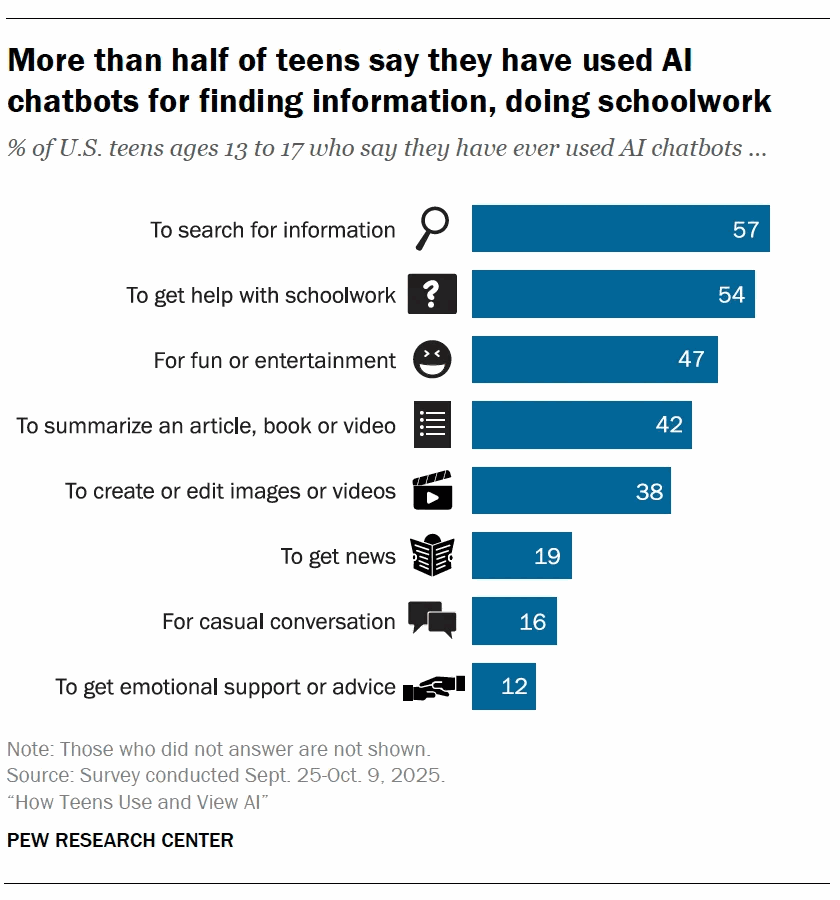
AI isn't a hype for young people. It's standard.
57% use chatbots to search for information. 54% for help with schoolwork. 47% just for fun.
These are no longer experiments.
This is routine behavior.
And then a data point that gets little attention:
12% use chatbots for emotional support or advice.
That's not gadget behavior. That's relational use.
For part of this generation, AI is already a conversation partner.
How deep does it go in the learning process?
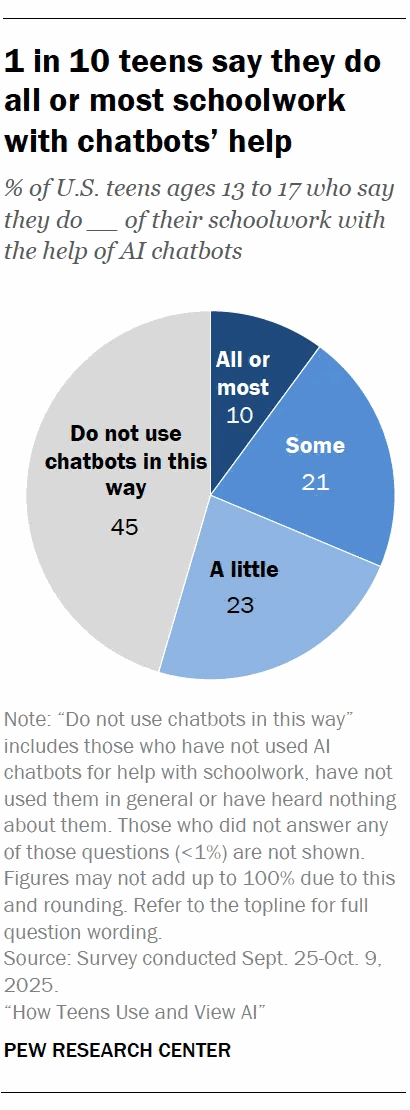
1 in 10 teens does most or all schoolwork with the help of chatbots.
Another 44% uses it "a little" or "sometimes".
This means that almost half structurally use AI for learning.
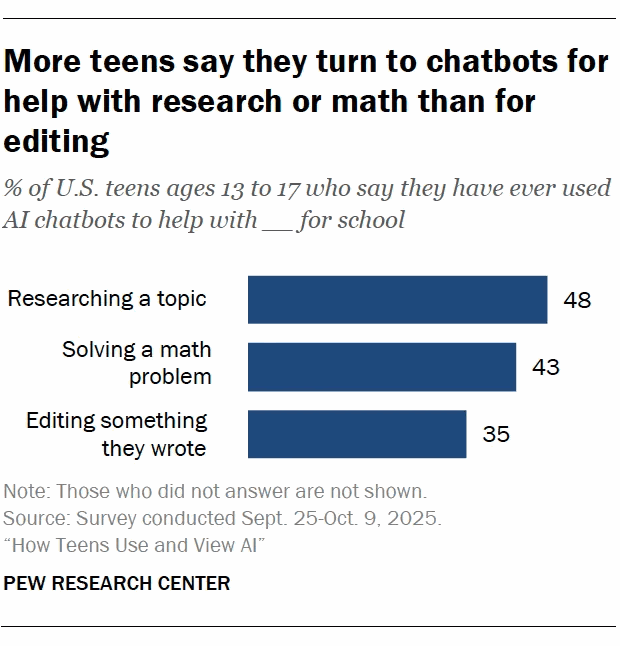
What do they use it for?
- ▸Research (48%)
- ▸Solving math (43%)
- ▸Editing text (35%)
They mainly use it to think. Not just to make sentences prettier.
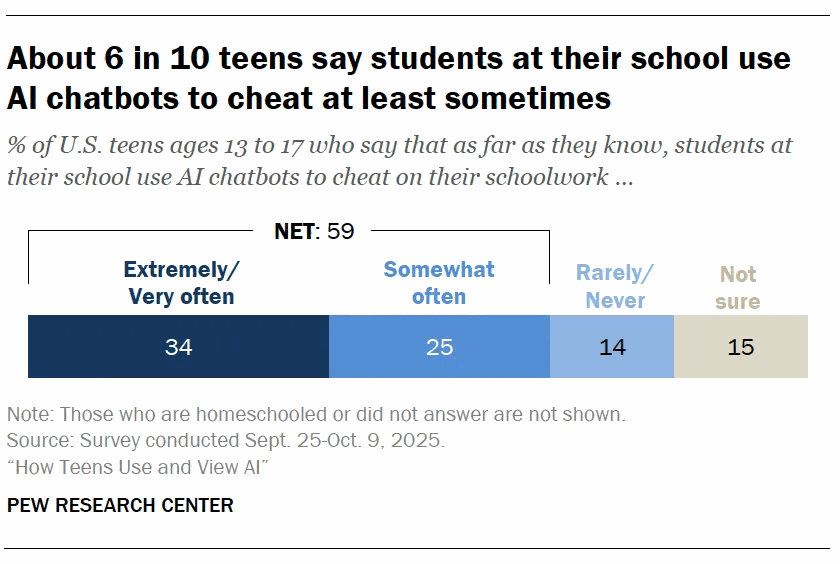
59% think AI cheating happens regularly at school.
What was called "cheating" yesterday is called "working smart" today.
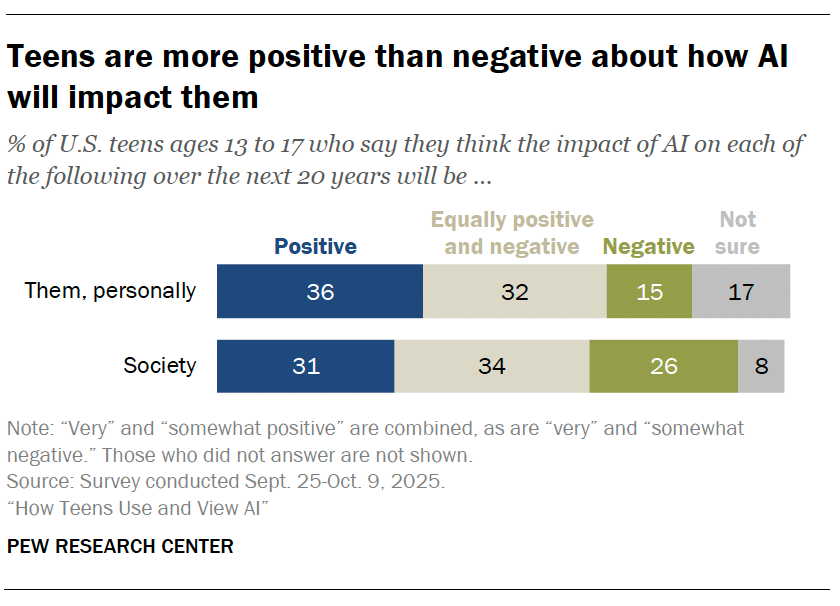
Are they naively enthusiastic?
No.
36% expect AI to positively impact their personal life. 15% expect a negative impact.
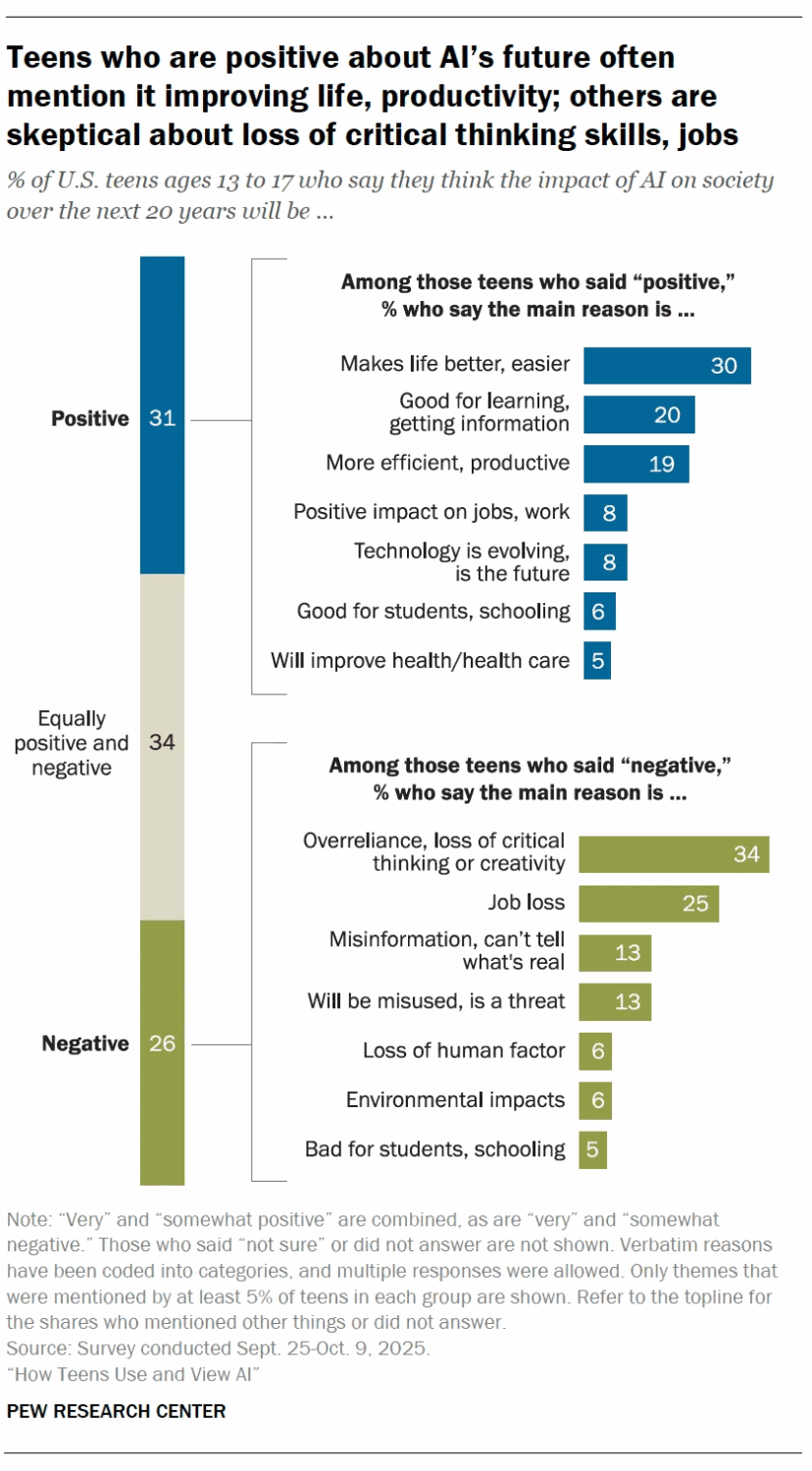
Benefits they mention:
- ▸Makes life easier (30%)
- ▸Good for learning (20%)
- ▸More efficient work (19%)
Their concerns:
- ▸Loss of critical thinking (34%)
- ▸Job loss (25%)
- ▸Difficulty distinguishing what's real (13%)
That's remarkably mature. They see both the accelerator and the shadow side.
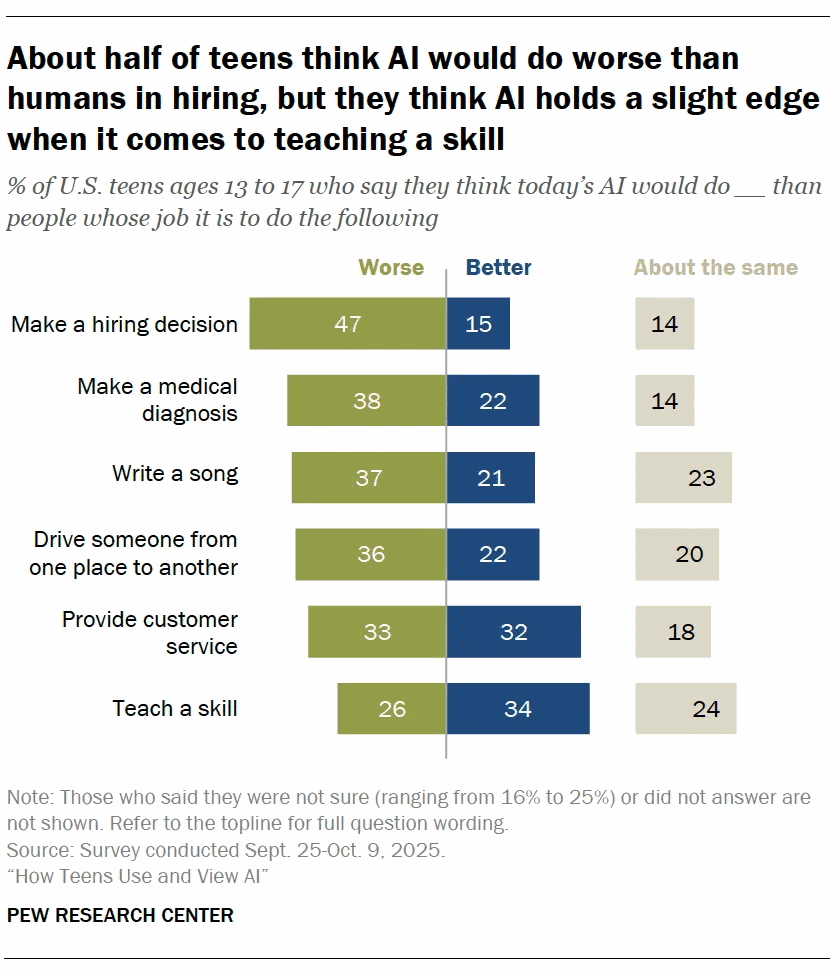
Trust in AI capabilities
For job applications, they prefer trusting humans. 47% think AI is worse at making hiring decisions.
But for learning a skill? 34% think AI can do it better than a human.
They see AI less as a decision-maker. More as a trainer.
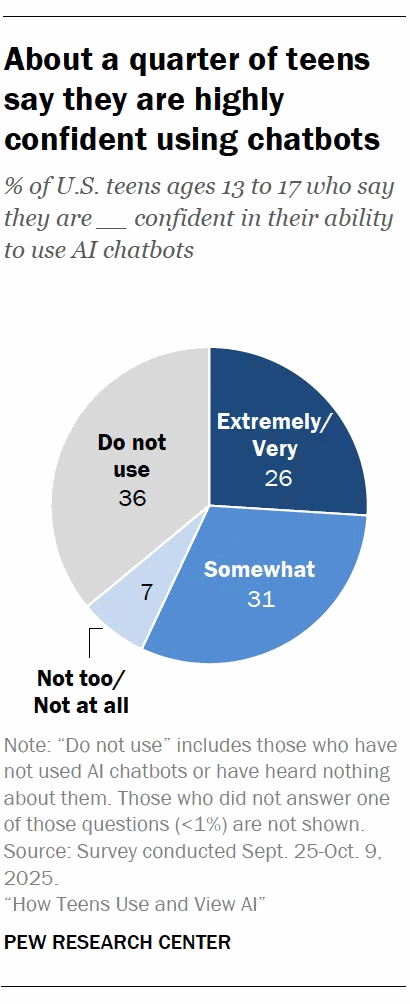
26% feel very comfortable with chatbots. 31% reasonably comfortable.
Almost 60% feel competent. They grow up with this tool. Like we grew up with Google.
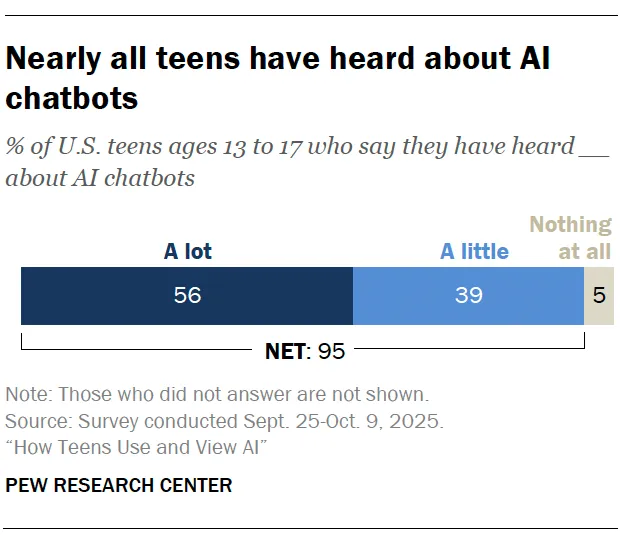
What stood out most to me
Almost all teens (95%) have heard of AI chatbots. This conversation isn't niche. It's cultural.
We often talk about AI as if it's something that's yet to come. For young people, it's already here. In their classroom. In their bedroom. In their head.
My opinion
This research isn't just about usage. It's about a shift in how a generation learns, thinks and asks questions.
If you grow up with a system that always answers, it changes your relationship with knowledge.
Maybe they'll become more efficient. Maybe more dependent. Probably both.
But one thing is clear: we can pretend this is a phase. Or we can acknowledge that this is the new starting point.
I'm curious how you see this.
Until next time,
Olaf Lemmens Founder - NinA AI Agency
P.S. Want to discuss how AI can come into its own in your organization? Or how these tools can save you time? Schedule an introduction via this link. Or visit www.nina-ai.nl