Blog · AI Trends
2026: The Year of Truth for AI
Olaf Lemmens, Founder NinA AI Agency · December 29, 2025 · 8 min read
The honeymoon phase of AI is officially over. Where we were still applauding in 2024 for a chatbot that wrote a flawless poem, the boardroom in 2026 asks only one thing: "Where's the profit?"
Last week I cycled back from a visit to a data center and realized once again that we're at a turning point. The 'hype train' is slowly coming to a halt. In 2026, only companies that realize that AI is more than a handy tool will survive - it's a way to look at your processes differently.
TL;DR:
- •The autonomous colleague: 40% of business software will contain active 'agents' in 2026 that independently handle processes instead of just typing texts.
- •The great cleanup: Global investments are hitting $2 trillion, but half of that evaporates if the underlying data infrastructure isn't in order.
- •The end of the lazy thinker: While AI automates tasks, 50% of organizations predict a shortage of critical thinking skills, making 'AI-free' work a luxury competency.
$2 Trillion
The prediction for 2026 is a staggering $2 trillion. That's the dizzying amount being pumped into AI worldwide. But behind that impressive facade of numbers lies something called the 'Scaling Gap'.
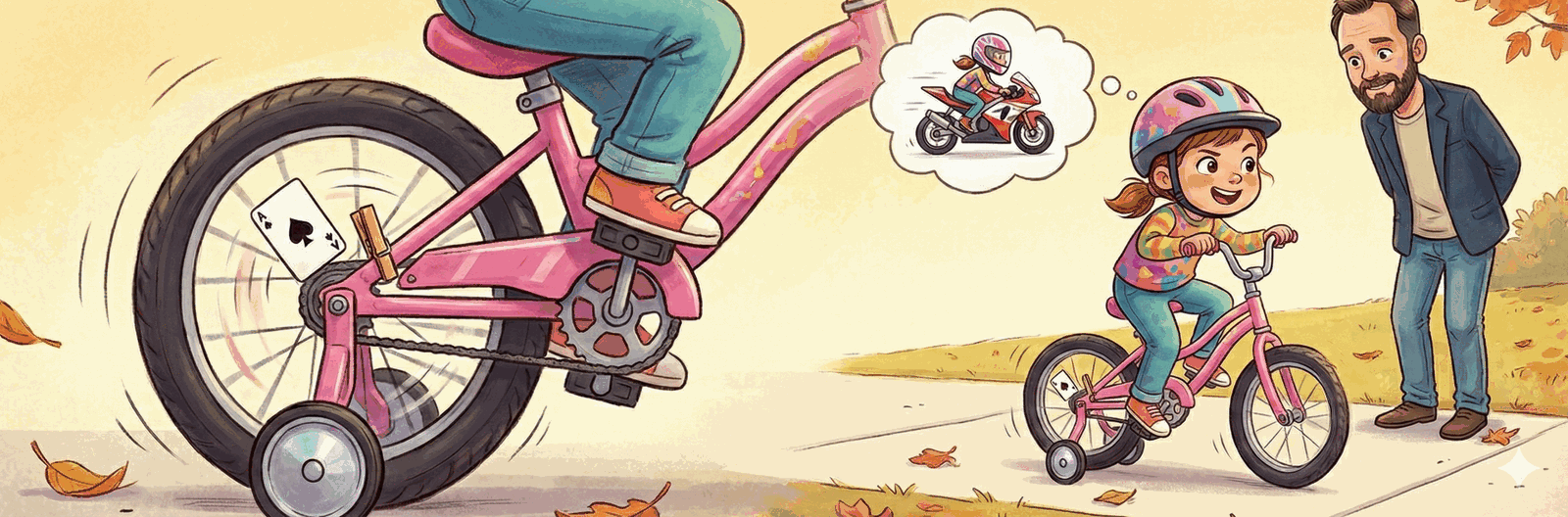
McKinsey notes that while 88% of companies are now experimenting with AI, most are still stuck in the playground of 'pilots' that never mature. It's like my daughter's bike with a playing card between the rear wheel; it makes a lot of noise, but she doesn't go any faster. (She thinks differently about this)
At NinA AI Agency, we see this daily. Companies want the 'Skynet experience', but they forget that a rocket doesn't get off the ground without the right fuel. In 2026, that fuel is no longer 'more data', but 'better data'.
The focus shifts from collecting junk to building a central, pure source. Let's be honest: building an expensive AI on a foundation of quicksand is the shortest path to bankruptcy.
Agentic AI
In 2026, we're no longer talking to computers; we're giving orders to shadow employees.
Goldman Sachs predicts this is the breakthrough year for 'personal agents'. These aren't simple chatbots that politely answer, but systems that take action. A logistics system that doesn't just warn of a delay, but independently books a new route and adjusts the invoice.
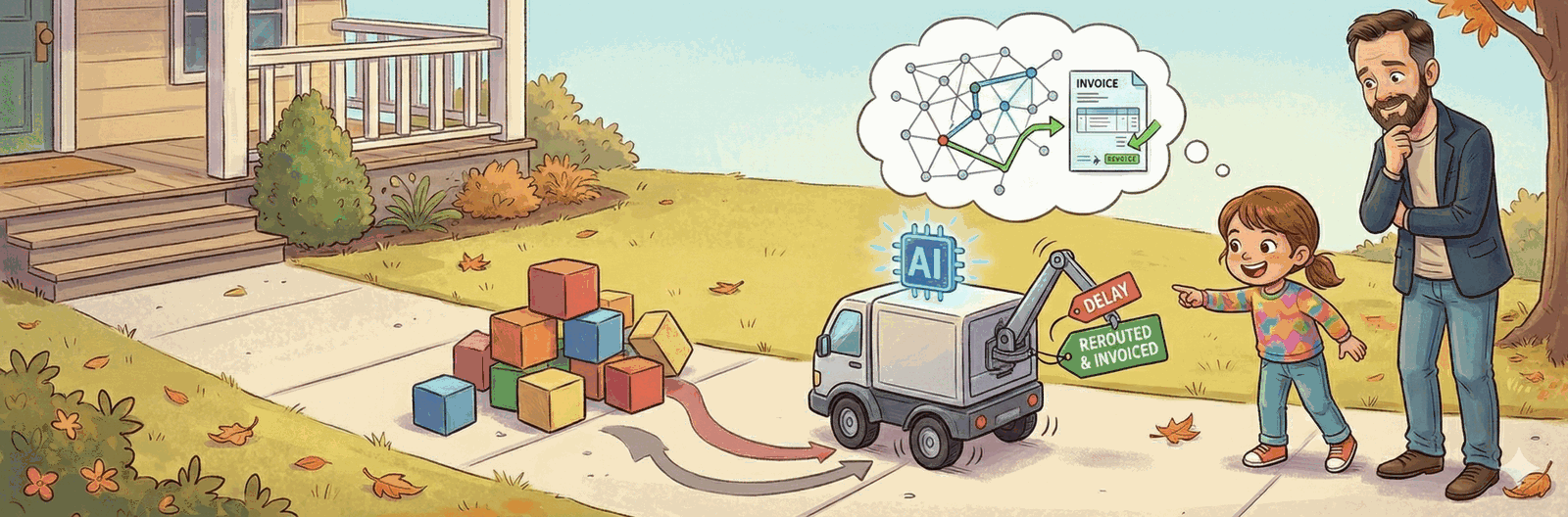
Gartner estimates that by the end of this year, 40% of all business applications will have such agents embedded. We're moving toward a world of 'Agent as a Service'. You no longer rent software, you rent work.
This is the ultimate form of Shopify's mantra: "Hire an AI before you hire a human". It fundamentally changes the dynamics in the workplace. The question is no longer whether a task can be done by AI, but why you would still have a human do it. (In defined tasks and processes, of course)
The AI 'Vibe'
Even the way we build these systems has become unrecognizable. We're in the middle of the era of 'Vibe Coding'. Nearly 25% of the latest batch of top startups now builds their software 95% with AI-generated code. They 'vibe' with the system: they describe the desired outcome in natural language and the AI builds the walls and the roof.

This means the barrier to turning an idea into a working prototype has become virtually zero. But beware of the trap.
Bernard Marr warns of the 'Synthetic Content Crisis'. Now that everyone can generate a perfect website or report at the push of a button, a sea of mediocrity emerges. Value shifts from production to curation. The human voice must shout louder to rise above the digital noise.
The Return of Common Sense
Perhaps the most shocking prediction for 2026 is that we're getting dumber because of our own creations. Gartner signals an 'atrophy' of critical thinking. If AI chews all decisions for us, we unlearn how to taste for ourselves.
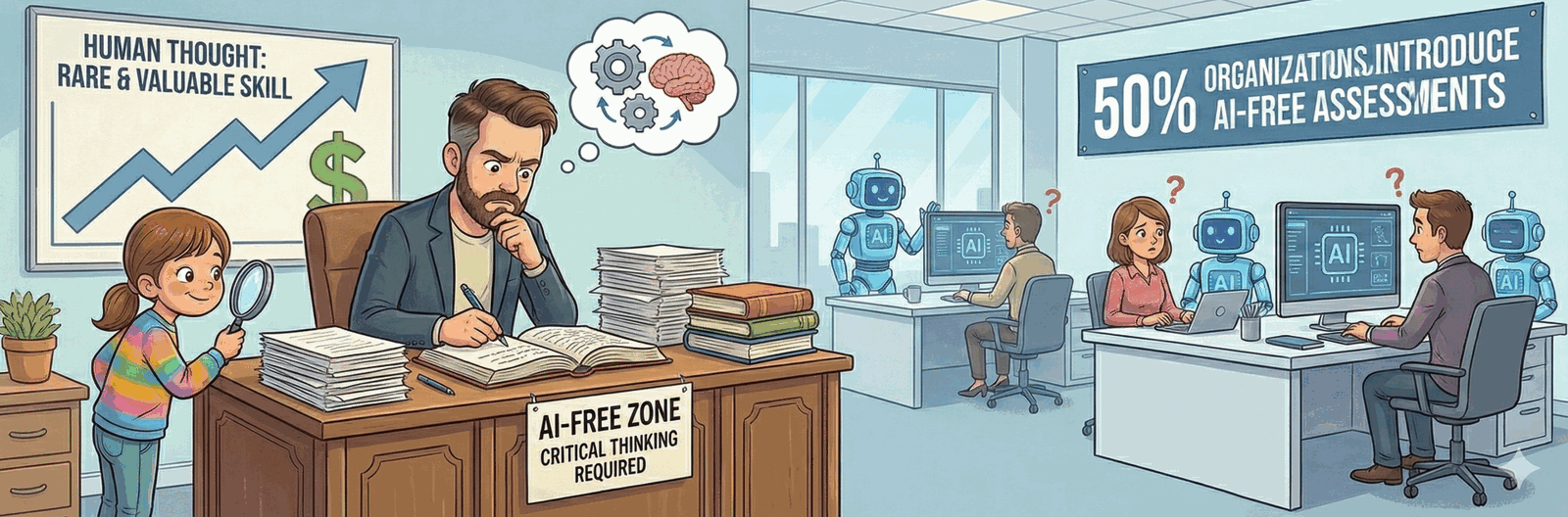
That's why 50% of large organizations will introduce 'AI-free' assessments this year. Being able to think without an algorithm by your side becomes a rare, expensive skill.
At NinA AI Agency, we refuse 'over-engineering'. We don't build complex systems to replace people, but to free them from mind-numbing assembly line work. In 2026, the 'human-in-the-loop' is no longer an option but a necessity in a storm of automation. Empathy, creativity, and ethical judgment are the only currency that cannot be devalued by a faster processor.
My Conclusion: Building on the Ruins of the Hype
2026 is the year the wheat is separated from the chaff. Companies that keep waiting for the 'perfect' moment are in slow-motion failure.
The market has matured. It's no longer about how innovative your AI looks, but how silently and reliably it runs your core processes.
We're building the future, one workflow at a time. Is your data a foundation of concrete or a sandcastle waiting for the next tide?
The time for talking is over. Let's build.
I'm excited! And our team will continue to grow in 2026 to meet all demand. Join us!
P.S. Want to prevent your organization from drowning in the 'Scaling Gap'? Let's meet and see where the real pain is: www.nina-ai.nl